What we do
Today is Life · Hamburg x Heraklion
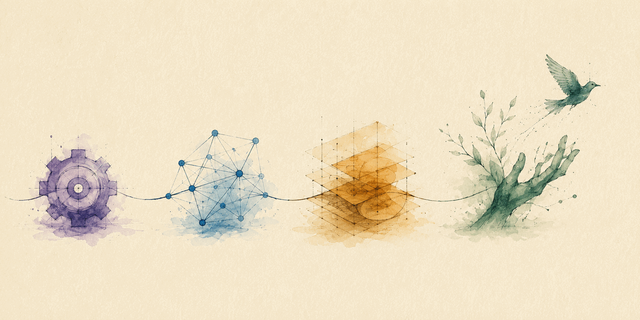
We look at digitalisation through four kinds of intelligence.
Software experience since the days when computers didn't yet pretend to think.

USA / History of the personal computer
Steve Jobs
„Steve Jobs with Wendell Brown in January 1984, at the launch of Brown's Hippo-C software for Macintosh (cropped)“ by Carol Rukomii Holladay, 1984
Source: Wikimedia Commons · Licence: CC BY-SA 4.0 · Image credits
Editing: Scaled and compressed; otherwise unchanged (image crop as on Wikimedia Commons). The edit is under the same licence, CC BY-SA 4.0. Edited by Today is Life.
In 1984 Steve Jobs presented the Macintosh. Computers were no longer meant to be machines that people had to adapt to. The machine was to become easier to understand: graphical, direct and personal. Forty years later we no longer just carry out commands. We talk to computers, have AI systems analyse, program and prepare decisions. In between lies practically the whole history of modern software. We were already there when computers didn't yet pretend to think.
Machines can think. Data can show connections. Software can take over work. But in the end, people still have to decide.
The 4 kinds of intelligence
Artificial Intelligence
What machines can do by now.
Reference · Hamburg
Complete ERP system: dispatch planning, time tracking, invoicing, AI pest detection from a photo.
“Developed with AgenticAI: human and AI as a team.”
Business Intelligence
What data actually tells us.
Dashboards, key figures and analyses that your managers actually open. Answers instead of data graveyards.
Human Intelligence
What actually stays human when machines get ever more intelligent?
You'll quickly find out how a new tool works. This is about responsibility, judgement and the question of what a person still has to decide in the end.
Software Intelligence
How that turns into working systems.
Bespoke applications, interfaces to your systems and automated processes. Developed between Hamburg and Heraklion, from real product practice.

What we actually build
Guardlane
AI governance for organisations that now have more AI than they realise.
pame
Business intelligence you can click through: associative instead of report by report.
AEO Pro
WordPress plugin that also prepares a website for ChatGPT, Perplexity and the like.
Reference
EULE
Complete ERP system: dispatch planning, time tracking, invoicing, AI pest detection from a photo. In use at Kleefeld Hamburg.
40 years of technology history
1980s → 2026 from mainframes to Agentic AI
Things we're thinking about right now.
AI First
When machines describe the world – and who gets to decide about it
If AI one day writes all the program code and nobody reads it any more, the specification becomes the actual program. That raises a very different question: who gets to define what applies in it?

AI First
The invisible watermark
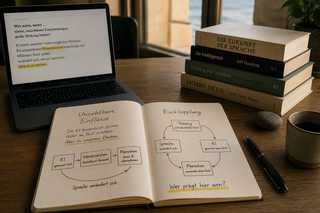
An AI watermark isn't stored in any file. It sits in the choice of words itself. How that works technically, and why it raises a much bigger question: will it change our language in the long run?

Business Intelligence
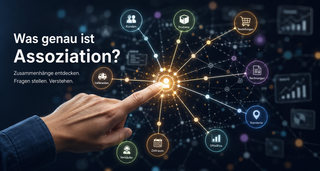
What exactly is association, anyway?
We think in associations, not in forms – if you think of Hamburg, you may end up in Crete within seconds. Why classic CRUD systems can't do exactly that, and what it has to do with business intelligence.
Technology is never just technology
Technology is never just technology.